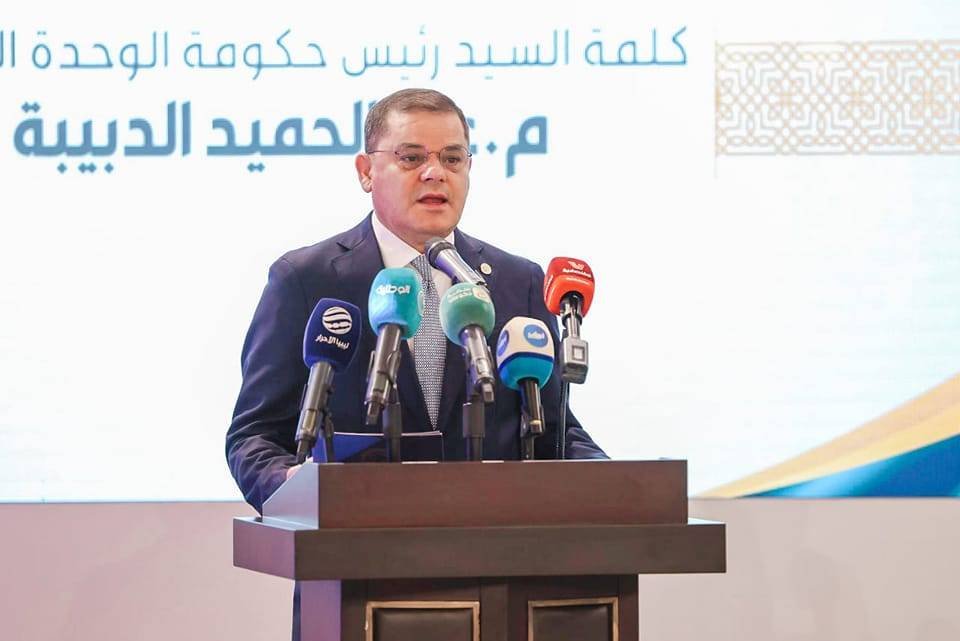
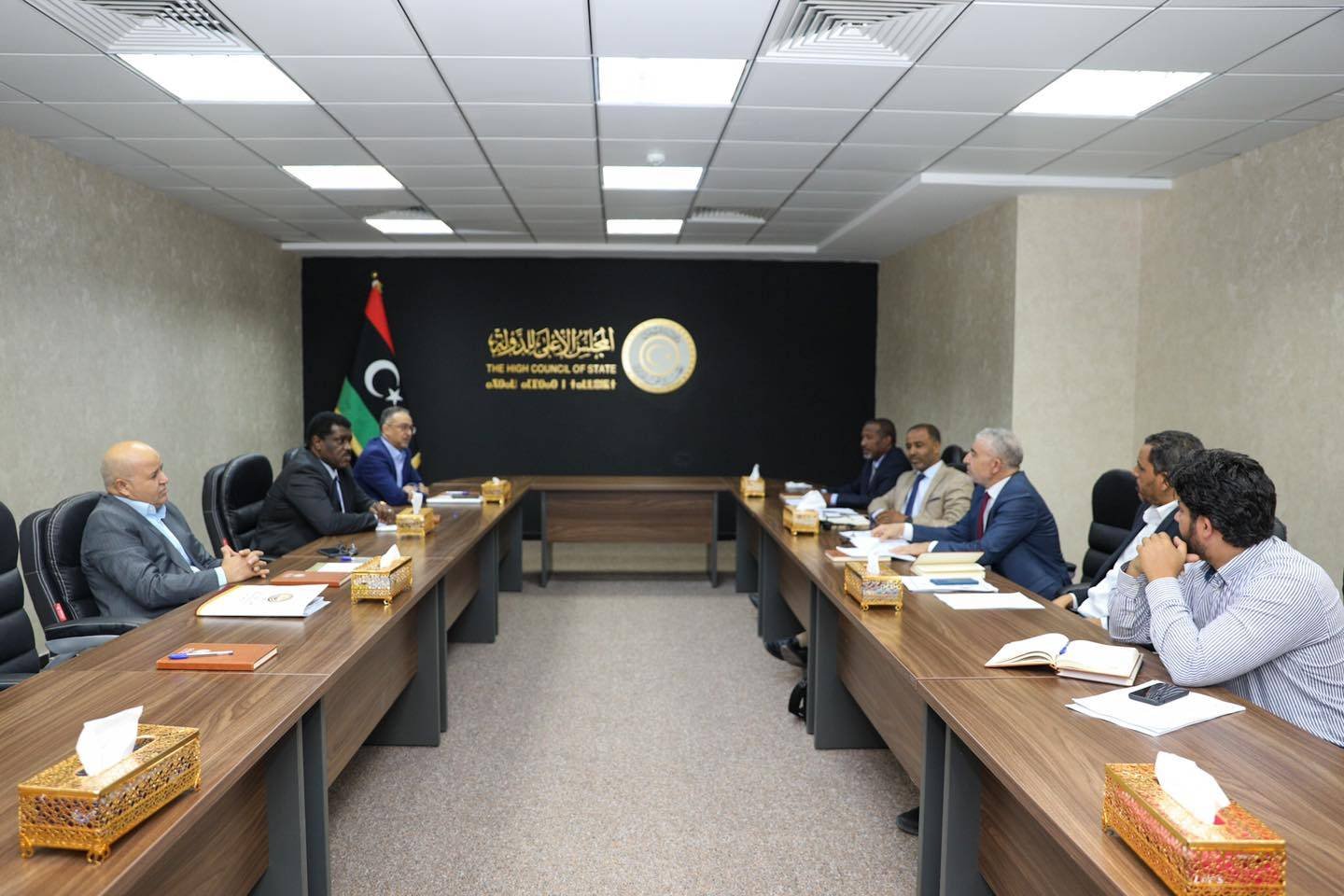
The Libyan capital, the headquarters of the temporary “unity” government, headed by Abdel Hamid Al -Dubba, hosted a meeting last week that included Khaled Al -Mashri, one of the disputed heads of the Supreme Council of State, and a number of candidates for the presidency of a “new government”, who previously presented their programs to the House of Representatives a few months ago.
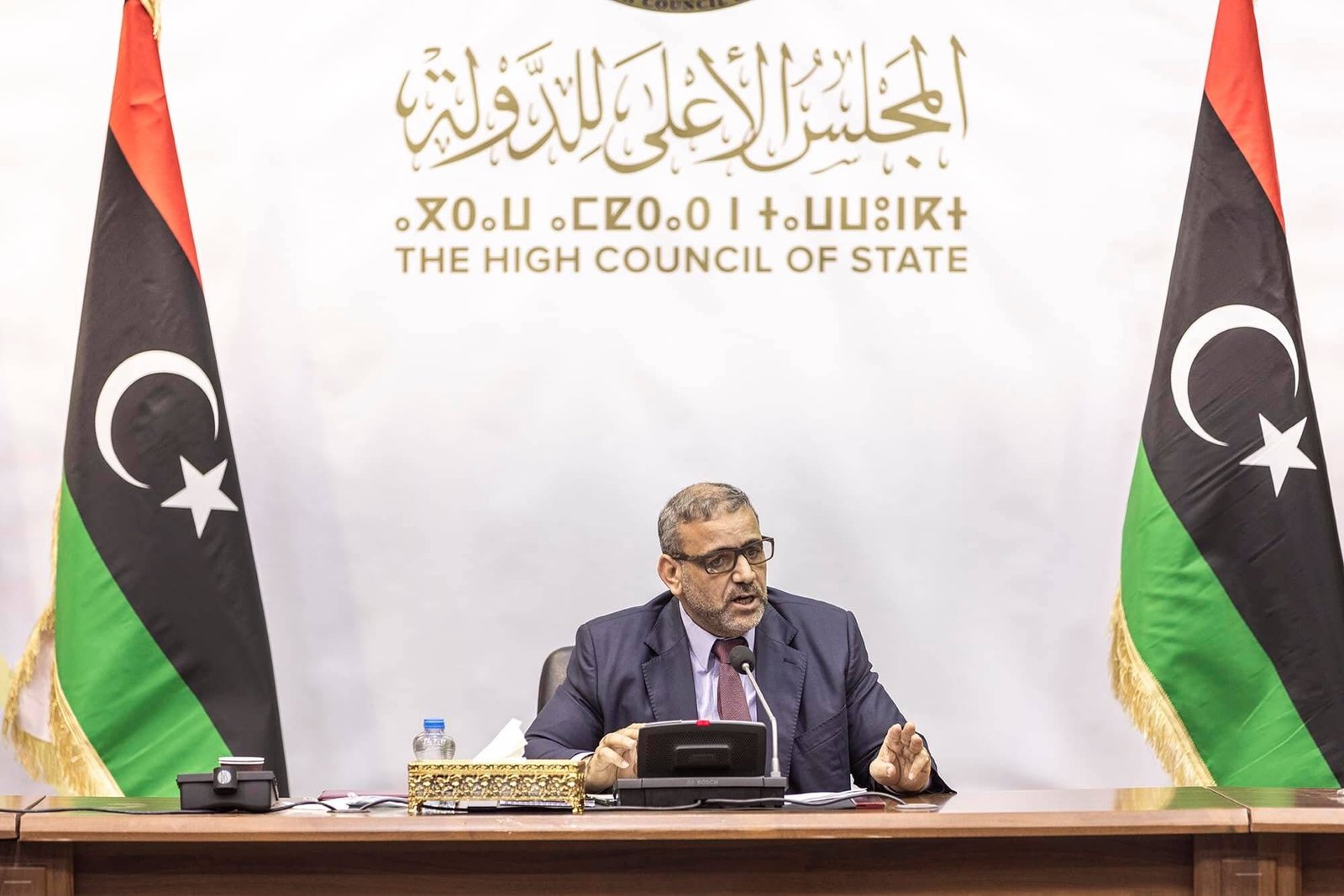
Despite the fear that the participants were subjected to security harassment by the government of “Al -Wahda”, the meeting passed smoothly, which renewed the questions about the ability of both the Mashri and the Speaker of Parliament, Aqila Saleh, to remove Al -Duba from his position and the inauguration of a “new government” for the country, which they have been promoting for a while.
* New government
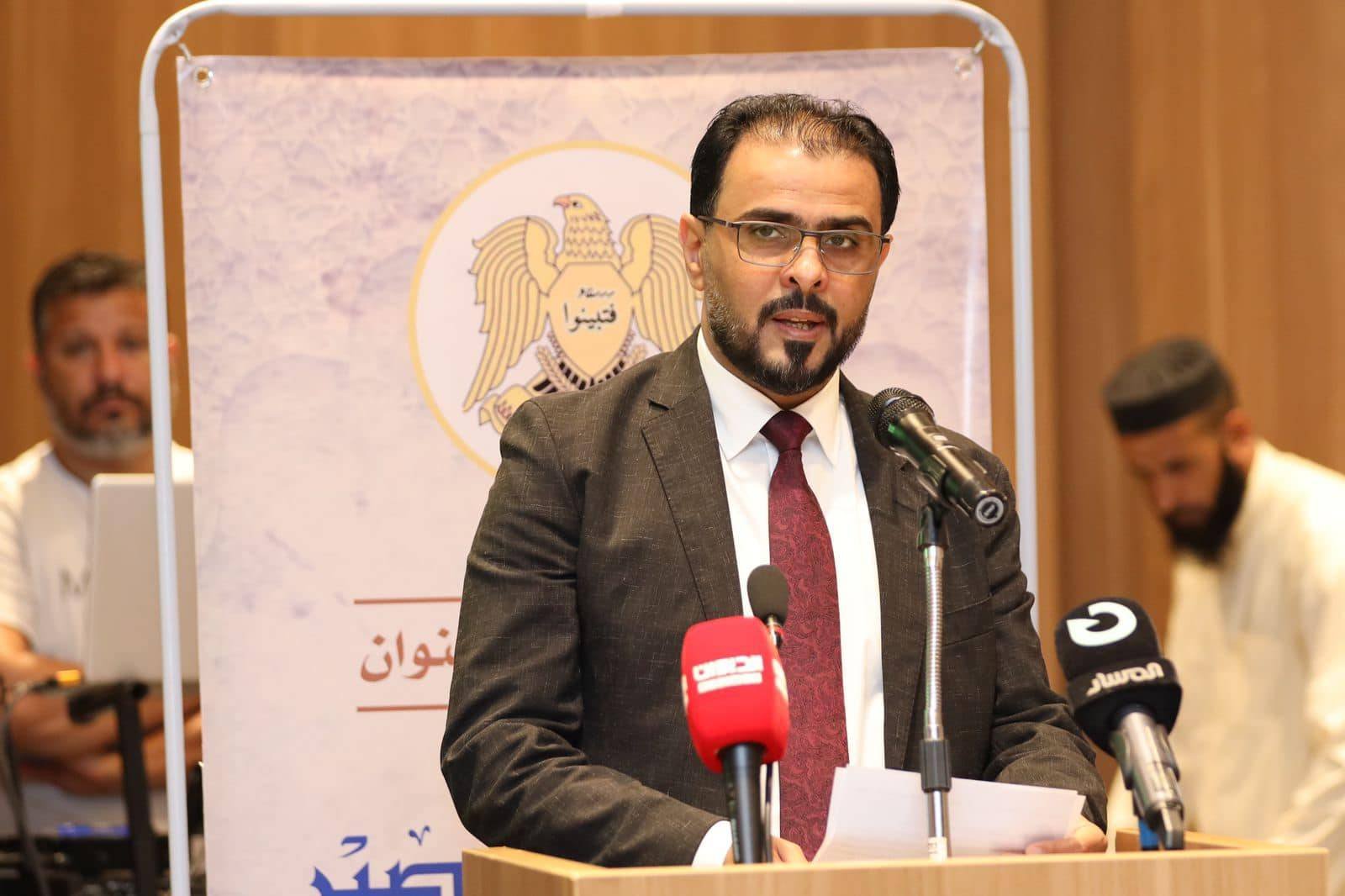
Amid the race and the two parties seeking to accomplish this task, the candidate for the presidency of the government, Salama Al -Ghuwail, considered that the fate of the “new government” approached the actual resolution stage, in light of the “popular rejection of the Dubai government.”
In a statement to Asharq Al -Awsat, Al -Ghuwail said that “some security forces provided facilities for the meeting, and received the candidates at Maitika airport, which indicates implicit support for the national project of the House of Representatives and the Supreme Council of State by forming a new government, through which the current governmental division ends, and the elections are prepared.”
Al -Ghuwail, a former Minister of Economic Affairs of the “National Unity” government, stressed that the balance of power in the Libyan West began to tend in favor of the forces rejecting the Dubaya government remaining in power, which may enhance the chances of the birth of an alternative government to it, also enjoying regional and international support.
The authority in Libya is contested by two governments: the first is “national unity”, and the other is costly from Parliament and also has the support of the national army led by Khalifa Haftar, and it runs the eastern regions and parts of the south.
Despite the UN mission in Libya’s announcement of a new road map to resolve the political crisis, Al -Ghuwail believes that the efforts of the House of Representatives and the Supreme Council of the State to form a new government “do not contradict the path of the UN organization, but rather seek to coordinate with it”, and spoke about the parliament’s tendency to hold a joint session with the “Supreme Council” in order to “choose the new prime minister, in the presence of the UN mission, the League of Arab States, and the African Union”, but it did not specify its date.
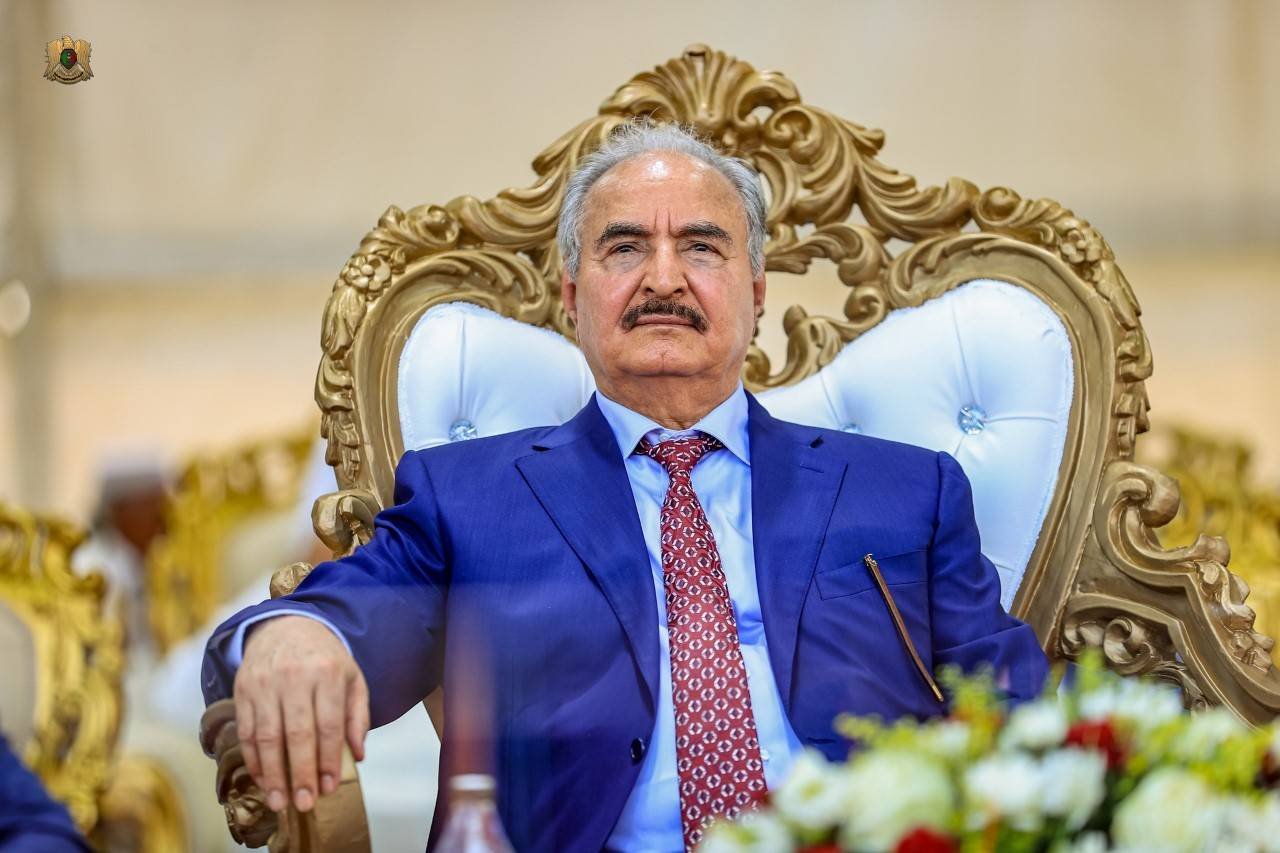
Despite the silence of the General Command of the National Army, and the failure to declare any clear position on the formation of the new government, Al -Ghuwail refused to consider this “a lined message from the military establishment of the rejection of that government”, as some promote, and said that the army “preferred to distance the statements and political records”, pointing to the “movement and wide openness by the General Command of the Army over regional and western capitals, including former opponents such as Turkey, which can be used and enhance opportunities and enhance opportunities International recognition of that government. ”
* «Mono movements»
On the other hand, the head of the Political Affairs Committee of the Supreme Council of State, Muhammad Muzab, believes that “the file of the political process and everything related to it is the formation of a government supervised by the UN mission. Everyone is awaiting the upcoming briefing of the head of that mission, Hana Tité, in the middle of next month.
Muzaab saw that “no one yet knows the details of the upcoming political map, and will it call for parliamentary elections first and then form a government, or establish a new political dialogue committee?”
According to the vision of Amzab, the movements of Aqila and Al -Mashri in this way are nothing more than “mono movements that do not work”, explaining that Aqila Saleh “repeats the talk about the formation of a government for almost a year, while Al -Mashri seeks to stabilize the legitimacy of his presidency of the Supreme Council of State, by meeting with the candidates and taking pictures with them.”
In this context, Muzaab says: “Everyone knows that the Supreme Council of State has suffered a division for a year due to the dispute, which has not been decided on the results of his presidency elections between Al -Mashri and Muhammad Takala,” adding that “the recommendations of the candidates that were issued by some members of the Supreme Council individually that can be challenged.”
For his part, a member of Parliament Suleiman Swaker described the path of forming the “new government” as “still fraught with complications, despite some positive indicators”, such as the Tripoli meeting, and the participation of candidates affiliated with the Libyan East.
Swaker told Asharq Al -Awsat that “these indicators remain formal, unless they turn into a clear political agreement that determines whoever rules, who is funded, and who guarantees implementation.” He stressed that the absence of deep consensus in the Libyan scene will make any attempt to form a new government merely temporary arrangements that reproduce the conflict itself, which means consolidating the division instead of overcoming it, under new addresses, without real treatment of its political and institutional roots.
The “Unity” government had launched two months ago a security operation that it said aimed at dismantling armed formations “out of the law, and entered the state”, which resulted in clashes between its forces and the forces of the “deterrent apparatus”, which controls vital areas in Tripoli, including Maitika airport.
Despite the announcement of the calm between the two sides, demonstrations took place over the past two weeks, the participants demanded that the residents of the capital to leave the Dubai government, and they also denounced the security services and armed formations.