The Iraqi media is “lost” between professionalism and bias
Finally, in a tweet that seemed a remarkable, former Iraqi Prime Minister Nuri al -Maliki, the head of the “State of Law” coalition, warned, which he considered “fears of the consequences of restricting the free and influential media in Iraq” amid silence, describing it as “terrifying”, from the legislative, executive and judicial authorities.
Al -Maliki wrote: “Two dangerous phenomena threatening our constitutional democratic system: the first is the features of the political crisis. The second is to attack free media according to the interests, and in light of the terrifying silence of the three institutions: legislative, executive and judicial ». He continued about the second phenomenon that it is “in the pursuit of the restriction of the free and influential media, making it confined to a specific angle, and keeping it away from contact with the fundamental issues that are related to the supreme interests of the Iraqi people, as if the purpose of the media is entertainment or polishing. Hence, the security services must refrain from confronting freedom of expression and its confiscation, as the media is the most prominent aspect of the constitution and democratic life, and the media must move away from falling and targeting national institutions. Hence, the former Prime Minister considered that “the policy of muzzling mouths and accountability of the media is due to a word, criticism or media comment that will exacerbate crises and threaten societal peace.”
At the gates of elections
Al -Maliki’s warning, who was heading the Iraqi government for two sessions, with the Iraqi political forces’ preparation for a battle that is one of the most important battles in which politics and media overlap, before months of the parliamentary elections in the country. This is because the Iraqi political and partisan forces, foremost of which are the Shiite forces, which are included in a political alliance is the “coordination framework”, which in turn includes Maliki as a leader of the “State of Law”, and Prime Minister Muhammad Shuaa Al -Sudani. The latter was a member of the “Dawa Party” that Al -Maliki had topple, before he came out of him after he assumed the position of Prime Minister, and a few days ago he formed a political alliance that is the largest under the name “Reconstruction and Development”.
While the Sudanese decided to enter the upcoming parliamentary elections in the capital, Baghdad, carrying “one number”, Al -Maliki also decided to enter the elections, carrying “one number” as well. Competition between the two men is now underway at the level of media and political practice, while there was no test for both of them in front of the public, which is expected to give one of them his votes during the November elections next.
Between two times
It is noteworthy that the Iraqi media had come out after 2003 from the state of one party and one symbol, which is completely restricted in terms of freedom of expression, to a space that seemed very wide. However, he still pays the tax of salvation from the restrictions of the dictatorship to the ruins of democratic space.
This space has made the media and the media an easy goal, whether for assassination crimes or restricting freedom of expression, constitutionally guaranteed under Article 38 of the Constitution, and this is because it has not yet been legitimized by law, the case of dozens of articles of the Iraqi constitution. This situation makes suffering greater, unless the individual journalist, or the media, is protected or protected from a party or a great political force.
Fear of the unknown
Thus, after the media, before 2003, he feared the power of one party and one leader, as it is now amid a striking media pluralism, consisting of dozens of satellite channels, broadcasts, newspapers and agencies, not to mention the applications of “social media”, so he feared the unknown. The reason is a conflict of positions between the various political parties that have the wheel of power.
Also, before 2003, the media was dealing with one party, making it a prisoner of one position. This led to the migration of large numbers of Iraqi media people who belong to parties and forces against the ruling authority at the time, that is, the authority of the Baath Party. However, today, pluralism is afraid with all the chaos that accompanies it, as a result of the lack of constant and clear rules and rules for publication. This is the case, as a result of the absence of legislation for a special law that defines the concept of freedom of expression.
In addition to this, another important factor is the dominance of the forces of arms, which also has media platforms and applications on social media, which makes the concept of pluralism according to this unbalanced equation as a two -border weapon.

Competitors without restrictions
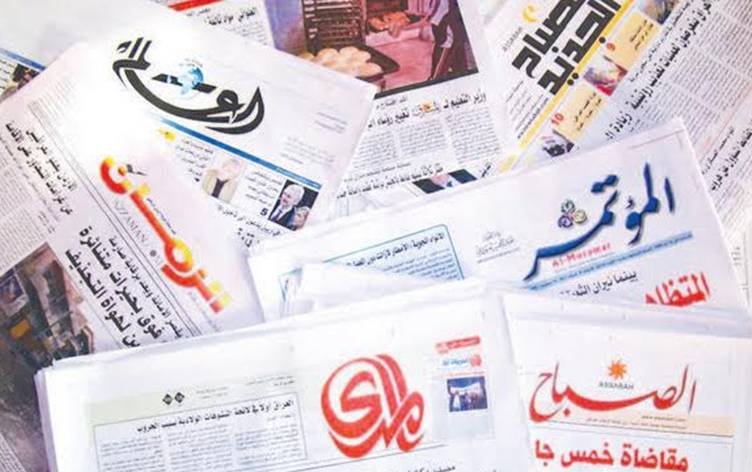
On the other hand, the Iraqi media began, whether written, read or watching, working to follow the professional formulas in expression, and in making the appropriate media content with the intention of influencing the public. However, the decline in daily newspapers sales to very low limits and the lack of strong infrastructure for other media – including satellite channels – immediately from being subject to competition between quality standards and purposeful content industry, and all that happens is mutual attempts to follow various ways and methods to bring the largest number of views regardless of the level.
While new competitors of the media may mean a better commitment to standards, the entry of a group of semi -media people who work without controls create chaos in the way of confrontation and the method of processing for media and political content together. Consequently, the concept of content industry turned into a fabrication of content for the purposes of bringing views, which is called in Iraq, “Al -Tshi”. What is meant by the “blasphemy” is the unrealistic spread of a media substance that may spread quickly among people, but not because it is a serious and sound content; Rather, it contains a great deal of the casual and even the banality, whether in words or concepts and vocabulary.
The phrase “triviality system”, according to the description of the Canadian old philosopher, has become the most widely circulated in the Iraqi media discourse that tries to get out of the cocoon of materials with descending and market content, and “thirsty” in the space of “social media”, bringing hundreds of thousands of fake views on which many media philosophies are based.
Meanwhile, Iraqi universities, whether through media colleges or media departments in other universities, are still studying subjects with purposeful content, and applies to what is studied by serious media concepts. However, unfortunately, as soon as graduates of these colleges enter the labor market, you see them often collide with a kind of media discourse that lacks all the criteria required in the purposeful means of high professional.