Crimea Tatars are the indigenous population of the Crimea, and they are a Turkish people from Eastern Europe that are historically formed on the peninsula, but it was subjected to major transformations over the centuries that resulted in the transformation of the indigenous people into a minority in their homeland. When Moscow took control of the region in 2014 and included in the Russian Federation, Crimea Tatars represented only 20 percent of the peninsula.
The Crimean Khania, which was established in the fifteenth century, was a multi -nationalist and sectarian country, in which he lived: Crimea, Jews of readers, Karimshak, and Urums (the descendants of the Hellenic), the Goths, Armenians, and the Crimean (or Ormancilli). During this period, a unique system of balance, harmony and tolerance arisen, which contributed to the emergence of a distinctive cracker. Religious and ethnic policy of Crimea was based on the principles of Islam.
Also, the era of the Crimean Khania witnessed a prosperity in the culture of Crimea, their arts and literature. Omar’s classic poet was in the poetry of Crimea’s Tatar in that era. As for the most important architectural teacher that remains from that era, it is the Khan Palace in Bakhshisari (the capital of Crimea in the Middle Ages).
Russian Empire
Throughout the eighteenth century, the Crimean Khania became a “bargaining paper” in the fierce geopolitical game between Türkiye and Russia, and at the end of the century it took place in the Russian influence area. In 1783, as a result of Russia’s victory over the Ottoman Empire, Russia occupied Crimea first and then annexed it to it. This was the beginning of a black era in the history of Crimea.
Indeed, the Crimean War was a direct violation of the Kochuk Kaynaraja Treaty of Peace. The inclusion of Crimea was accompanied by many violations of the rights and freedoms of the local population. The independent state of Tatars, led by Shajin Jirai, was also undermined.
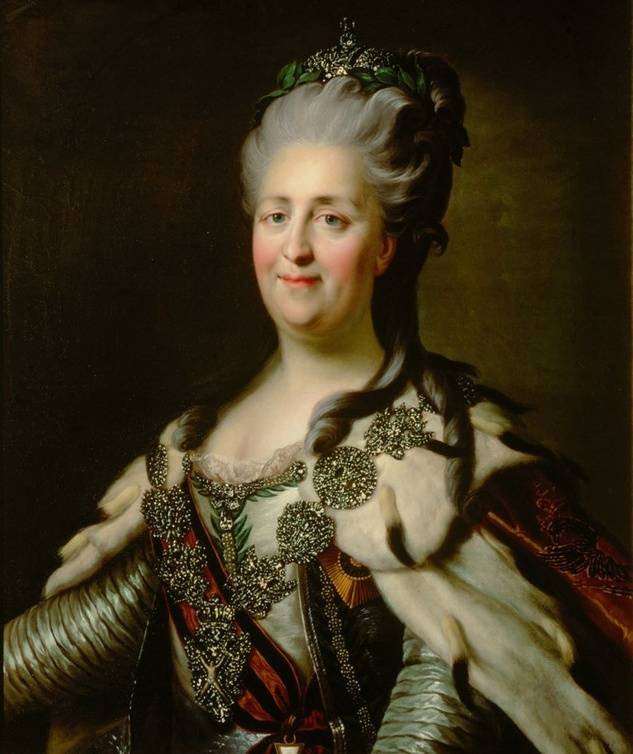
The inclusion of the second Russian Empress Catherine of the island turned into a catastrophe on the local population of Tatars; They were expelled from their lands that were confiscated, including lands at the disposal of mosques. Rather, the Russians transformed the free Crimean farmers into two arteries, which forced hundreds of thousands of Crimea to flee and resort to the Ottoman Empire. The “Cultural War” was launched on Crimea’s Tatars by order of the imperial authorities, and mosques and ancient tombs were destroyed. Thus, for the first time they became a minority in their homeland, and the Russian and Ukrainian settlers replaced them.
By the beginning of the twentieth century, the civil war in Russia had severe consequences for Crimea’s Tatars. In 1917, after the “February Revolution”, the first Coroltai (conference) was held for the people of Crimea, and declared the path of establishing the independent multinational popular Crimea. The operation was led by Numan Glyydijian, a politician, a public figure and a member of the Popular Crimean Republic Drafting Committee.
Then, the Corolletai House of Representatives approved the draft constitution submitted by the committee, and announced the establishment of the People’s Republic of Crimea. He wrote: «Our mission is to build a country like Switzerland. Crimean peoples are a wonderful bouquet, and every people need equal rights and circumstances, because we must go side by side. ”
But the “October Revolution” in Russia and the rise of the Bolsheviks – who did not recognize the government of Crimea – to power, undermined the existence of the emerging people of Crimea. On January 26, 1918, the Armed Bolsheviks Units from Sevastopol began active military operations. During which he was overthrown by the Crimea government, ended with the execution of Glyyidjian, and threw his body in the Black Sea.
However, in 1921, the Soviet Crimean Selfish Republic established the rule as part of the Soviet Socialist Federation. The two official languages were the Russian and the Tatars of Crimea, and the Supreme Command consisted mainly from the Crimean Tatars. But the short recovery period for national life, was suppressed by the Bolshevik leader Joseph Stalin in 1937. According to the 1939 census, the number of Crimea’s Tatars in the Crimea reached 220 thousand people, equivalent to only 20 percent of the total population of the peninsula.
Deportation and return
In 1944, with a decision of the Soviet leadership, Crimea Tatars was subjected to violent and comprehensive deportation from their historical homeland, and they were sent to Soviet areas in Central Asia, Siberia and Ural Mountains. The charge against them was “cooperation with the German Nazi occupation system” during the Second World War. According to official data, 193,865 individuals of Crimea Tatars were deported in that campaign.
Also, for more than 50 years, the name “Crimean Tatars” was deleted from scientific and legal use. All the names of the geographical sites that indicate their connection to the Tatars of Crimea were touched, and imposed a ban on the study of the Tariq language, and the development of cultural and national traditions.
However, in 1989, the Supreme Council of the Soviet Socialist Republics recognized that deportation was “illegal.” This was the first official recognition after decades of forced detention of the Tatars of Crimea in exile, preceded by a long history of secret activity surrounded by risks.
Beginning in 1967, the first families of Tatar Crimea began to return to the peninsula in slow and inconsistent operations. Between 1967 and 1977, only 577 families settled.
After that between the 1979 and 1989, the number of Crimea’s Tatars increased in the peninsula by 33 thousand people and during 1989, about 30 thousand additional people returned, and in general the return operations to the homeland reached their climax in 1990 and 1991, when the nucleus of the ethnic Crimea Tatars, which was distributed throughout the Soviet Union, moved to the peninsula. By the end of 1991, the number exceeded 150,000, and they were automatically with the disintegration of the Soviet state, Ukrainian citizens.
The heavy historical heritage in the relationship with Russia was one of the reasons for the alignment of Crimean Tatars alongside the Ukraine government against what they enemy “a new Russian invasion” of their historical homeland in 2014.