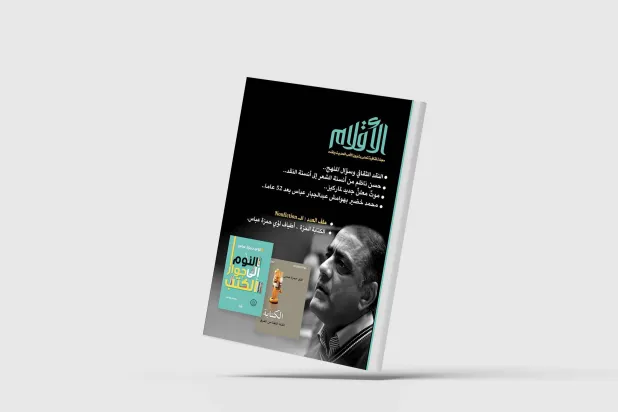
The second issue of 2025 of the Iraqi “Al -Aqlam” magazine, which entered its sixty -second year, issued by the Ministry of Culture, Tourism and Antiquities in Iraq.
The editorial of the magazine, which was written by the editor -in -chief, touched on the painful departure of the Iraqi poet Mowaffaq Muhammad, and his role in “consolidating the poem of the platform for more than four decades.”
The number included in the chapter of “illuminations”: “Cultural criticism and the question of the curriculum” by Dr. Bushra Musa Saleh, in which I went to the postmodern curricula from which we can enumerate the theory of reception and semiotics, dismantling and cultural studies, as we can call the interpretative curricula. Saleh Al -Razouq wrote an article entitled: “The representations of women in the novels of writers: Hani Al -Raheb and the star of the Wali,” in which he concluded to observe the impact of political psychology on the writer’s style.
The magazine published an expanded file on the writer Louay Hamza Abbas, entitled “Free Writing … Loay Hamza Abbas.” It was presented to the critical file, Dr. Abdul Sattar Jabr, indicating that two modern terms share the classification of transit writings of traditional types, which are self -imagination and imagination in the general sense of imagination in its literary significance and not narrative or narrative, considering that this file presented by the “pens” is an attempt by researchers, critics and writers to present different readings that are not celebrated and not A distinctive experimental representation of a different creativity that invests in literature and knowledge
. The file materials wrote: Muhammad Salama by translating Ramadan Muhlal Sadkhan, Ahmed Al -Zain, Sadiq Al -Turaihi, Abdullah Nasser, Saduq Nour El -Din, Hashem Tayeh, leader of Nassar, Hamza Alaiwi, Ali Saadoun. The file ended with two subjects, “Luminous Writing Prayers” and “Dialogue with the Cave, Louay Hamza Abbas”, in which he concludes that every writing of a contribution to the interpretation of reality.
In the section of “Studies”, we read to the critic, Dr. Dia Khudair, Article: “Hassan Nazim from the humanity of poetry to the humanity of criticism”; The critic Jamil Al -Shabibi published an article on the anecdotal groups in Basra, and Diaa Al -Thamari wrote about “The Desert of the Spirit in the Mara’i Al -Qasar and the late novelist Hamid Fadel”, in addition to the studies included in this section of Muhammad Attia Mahmoud, Abdel -Hussein Shaaban, Saleh Rahim, Adel Al -Thamari, Owad Muhammad Al -Tuwaijri and critic Muhammad Rashid Al -Saidi.
In the chapter of “Tarjan”, “Al -Aqlam” published an anthology of German poetry by Fitchchh Kas, with the translation of Janabi phone, articles in favor of Al -Taie, and she ruled Al -Hajj, Hassan Al -Hadary, Sami Shehab Al -Jubouri, Wydad Salloum, Raad Shaker Al -Samarrai, Ali Shabib Ward, Ada Deeb, Amal Ziada and Kazem Abu Jwaida.
As for the section “Sard”, it included short stories of a number of Iraqi writers: Hassan Nasser, Muhammad Ismail, Samir Ghali, Nawaf Khalaf Sinjari, Talib Kazem, Anas Tayyar and Abdel Nasser Abdul Amir.
While the door of “regards” contained a substance published for the first time, written by Raad Karim Aziz, which is the restoration of the margins of the late critic Abdul -Jabbar Abbas on the stories of the black kingdom of Muhammad Khudair 52 years ago with pictures that strengthened the value of this article as a document that was not revealed within half a century.
In the chapter “Revelation”, the following articles came: “The Baghdad Post novel, the Literary Orientalist Model” by the writer Moufid Issa and Mahmoud Abdel -Wahab, and “The Smell of Winter” by the critic Alwan Al -Salman, and “The Desert in the poems of Saeed Al -Saqlawi” by Dr. Talal Al -Kalbani, and “Why do we read the accounts of Baqir Sahib and Hannibal Lakter” to Ihab Shagheed.
The number also included poems for a number of Iraqi and Arab poets: Saleh Liberation, Abdullah Al -Zoubi, and Dar Qardagi, translated by Majid Al -Haidar, Ali Riad, Safa Salem Iskandar, Furat Asper, Sarmad Salim, Dergham Abbas, Amer Al -Tayeb, Muhannad Al -Khikani, Abdul Rahman Al -Majdi and Muhammad Aziz.
In the section of “Theater”, “Al -Aqlam” published a theatrical text of Tariq Al -Azzawi, entitled “The Devil is leaving.” The section of “formation” included two subjects: the first for Akram Al -Aqili, in which he recalled the fortieth artist and architect Qahtan Al -Madfai, while the material of the critic Khudair Al -Zaidi addressed an artistic vision of the artist Wissam Zakka. In the section of “Cinema”, we read a critical vision of the movie “The Thief and the Dogs” written by critic Abdati Bouhabab. As for the “pens” selections, the texts of the poet, Nima Abdul -Razzaq, dealt with.