Before the end of the working hours, on Saturday, May 7, 1932, the American novelist, the Nobel Prize, will arrive at William Fukner, to the “MGM -MGM” studio in Clever City, Los Angeles Province. He did not have a clear picture of the nature of the work that the trouble of traveling for him, as he surprised those who received him by saying that he had a new idea for “Mickey Mouse”, but the movie star Sam Marx told him that “Mickey Mouse” films were made by Walt Disney, and that he would be assigned to work on a movie for the theatrical and cinematic actor Wallace Perry. But the great novelist suddenly asked: Who is Perry ..? He revealed that he does not know this well -known actor. This story appeared in two books: “Joseph Blunener: William Fawkner .. a jealousy biography, 1974” and “Stephen B. Otis: William Fukner .. the man and artist, 1987 ».
But William Wakkner, the southern novelist from Oxford, Mississippi, who surprised them with the blogging of the idea in his mind about the work that awaits him, will be amazed later on the completion of the treatment of four stories within four weeks, to draw the attention of director Howard Hawx, who was impressed by his style, and bought a short story for him published in the Satardie Eveng Post. He asked Fokenner to turn it into a scenario, and he accomplished it in four or five days. Hoix described it as the best scenario he read. The relationship of Vokner continued with cinema, Hollywood, intermittently, two decades (1932-1954), during which he completed 50 scenarios for the three studios “Metro -Goldwin – Mayer”, “Warner Berraz”, and “Totantith Santori Fox”.
The writer’s misery and bankruptcy of the publisher
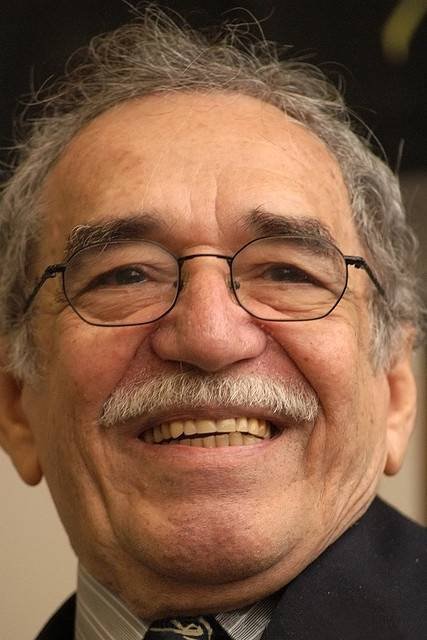
The novelist, who became one of the most famous writers in American literature in general, and southern literature in particular, went through a very bad financial situation, as the stores began to reject his checks that he signed without balance. His waiting was the last of the four thousand dollars from the publishing house “Cape & Smith”, his share of the revenue of his novel “Sanctuary”. The misery of the case reached its climax when the court put the publishing house under the judicial guard, then declared bankruptcy and filtering it. The clay increased the rejection of publishers of the chart of its new novel, “The Light in August”, perhaps for his request for five thousand dollars in exchange for publishing it, and to publish a mine without any interference from the publisher to make changes in the text. Meanwhile, the offer and the contract from the “Goldwin Maeer Metro” is worth $ 500 a week to work in the position of “Writer of Stories and Silos”. Although Faulkner was not enthusiastic, nor wanted to go to Hollywood and work in it, he had no other options. He packed his luggage and rode the train with a “metro -Goldenin – Mayer”.
Fokenner was not the first, nor the last novelist “Nubli” worked “Cinematography and Sinery Writer”; There are other Nobelian novelists who tried their hands in writing for cinema with a variation in their experiences: Naguib Mahfouz, Jean -Paul Sartre, Gabriel Garcia Marquise, Harold Pinter, Uhran Bamouq, Peter Handke, Ernest Heidagawi, Wall Swinca, Patrick Modiano, and Kazu Ishiguru. The list of names of non -Nobelian novelists is twice as long as the previous list. It is only possible here to pass through two experiences of his Nublin’s counterparts: Naguib Mahfouz and Gabriel Garcia Marquise.
Saved between the novel and the cinema
Perhaps it can be said that Naguib Mahfouz, like William Wakkner, did not choose, or even did not dream, to one day become a screenwriter and stories of cinema, and to have a cinema with a relationship of any kind. But it is the need and the difficult times that forced him not to overlook the first opportunity he had to work in the cinema when director Salah Abu Saif offered him to write a scenario for the film “Adventures of Antar and Abla, 1948”. Mahfouz recounts in an interview with Abdel-Fattah El-Fishawi (published in the “Al-Kawalab” magazine on 26-7-1966) that he did not seek to work in the cinema, and he did not think about writing it, and that the story of his relationship with it started with a call from Salah Abu Saif after reading the latter’s novel “The Tamper of Fate”, and his discovery that he has the talent The three in composing the movie scenario, “Antar and Abla adventures”, according to Dr. Abdel -Rahman Badr in his article: “The scriptwriter Naguib Mahfouz … The scenes of the Nobel writer entering the cinema.” Abu Saif ended Mahfouz by explaining the meaning of the word “scenario” and reassuring him that he would learn to write the script at the head of work.
From “Antar and Abla” to “Make me a criminal”
“Antar and Abla’s adventures” were the door that Mahfouz entered through the world of cinema, and he got acquainted with that world, and the residents were known to him, and Atef Salem was the second director who works with Mahfouz and that was on the film “Make me a criminal, 1949”, which appeared, as it seems, from the American movie “They Me A Criminal. 1939 ». Mahfouz, Mr. Badir and Atef Salem participated in writing the script, and played the role of the artist Farid Shawky.
The writer, Dr. Hajar Bakkaria, divides the biography of Naguib Mahfouz, in her article, “Naguib Mahfouz and the cinema” into four stages; The first stage extends 15 years from the movie “Adventures of Antar and Abla” to the movie “Jamila Al -Jazairia, 1959”, and the second begins in 1960, which witnessed the most important development and change in the relationship of cinema in Mahfid, as she moved from her need to his services as the Sarist to the need to translate a number of his novels into films, starting with the novel “Beginning and End, 1949”, and this stage continued to 1973. Stories of cinema and novels. The short story was a distinctive feature of the fourth.
Marquis .. broad and deep experience
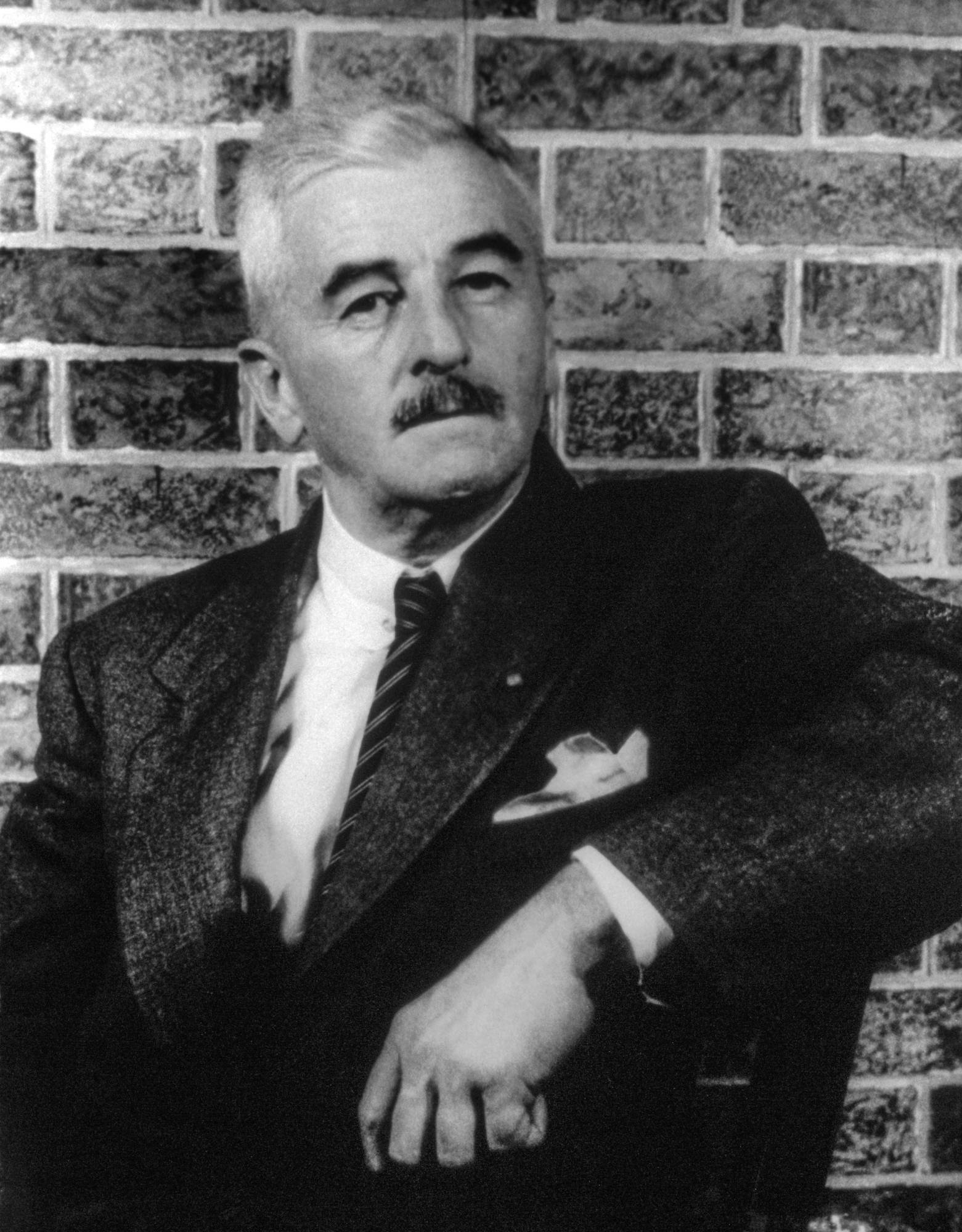
One needs larger and wider than part of an article to investigate and write Gabriel Marquez’s experience. His experience is distinguished from my experience, Fukner, preserved, depth, and overcrowding with experiences and events. The three experiences of the script and stories of cinema meet, and Marquis’s experience is separated from my experiences that it did not start and did not develop and deepen by chance. Marquis did not become a coincidence script, and the circumstances were not forced, as it seems, to cinematic writing to alleviate a financial crisis that disturbed his life. He himself sought to the world of cinema, he found and worked hard to seek what he aspires to. He began a cinematic journalist, then a screenwriter became a storytelling writer and novels into stories for cinema, coach of writing the script, and ended up originating from the new Latin American Cinema Foundation, then a cinema and television school for the third world, according to Maria Cortez, “Marquis and the cinema, 2009”.
Marquise’s relationship with the cinema is a passion for early childhood, when his grandfather, Colonel Nicholas Marquez, accompanied him to the cinema, and asking him after returning to recounting the films stories. This was an early training on narration with signs that stop the arrangement of events, on what is attached to his memory.
His work in the press, starting from 1948, had a role in enhancing his relationship and deepening his passion for cinema, in addition to developing his understanding of how to cinematic narration, not only through plot, acting and dialogue, but also how to employ the camera in narrating the events of the movie. Writer Shil Navos (March 2020) also indicates. Marquis’s cinematic biography of its richness and the multiplicity of his works is one of the most enjoyable and inspirational walks, as his literary course.
The end is the beginning
He realizes from the stories of Fukner, Mahfouz and Marquise in the cinema that the latter’s need for the novelist as a writer and a script is more severe than her need for his novels. For example, the start of the Work Market, a 14 -year -old script before his novel “Beginning and End” was translated into a movie. Mahfouz’s writing, or rather, his participation in writing the scenario of “Antar Adventures and Abla” was more important from the point of view of Salah Abu Saif than benefiting from one of his novels. In light of this, the local cinema appears to need a novelist writer more severe than its novel. Perhaps what has been produced so far from long local films support this view. The Saudi films: “The Delegate of the Night”, “Hubal”, “Naqa” and “Long Rail”, for example, are not cinematic translations of local novels, and its stories and scenarios were not written as novelists.
The novel is not the only narrative text that the novelist may contribute to the manufacture of local films, and not the only raw material, also, to make films that narrate the tales of imagined people (resemble us) according to the common statement; And convey to the world pictures of our society and our culture. The novelist, in cooperation and dialogue with the cinematic, when the need and desire for the latter, can complete stories of cinema and scenarios that achieve this. Does this express a refusal to employ a cinematic for the local novel? Certainly no. But I see that the arrival of the local novel to the screen and in a relatively large numbers that satisfy some, and continuously, will be delayed for some time, due to the lack of any data and indicators in light of which cinematographers guided to novels that expect to be a raw material for films that achieve mass success through the box office.
* Saudi writer and critic