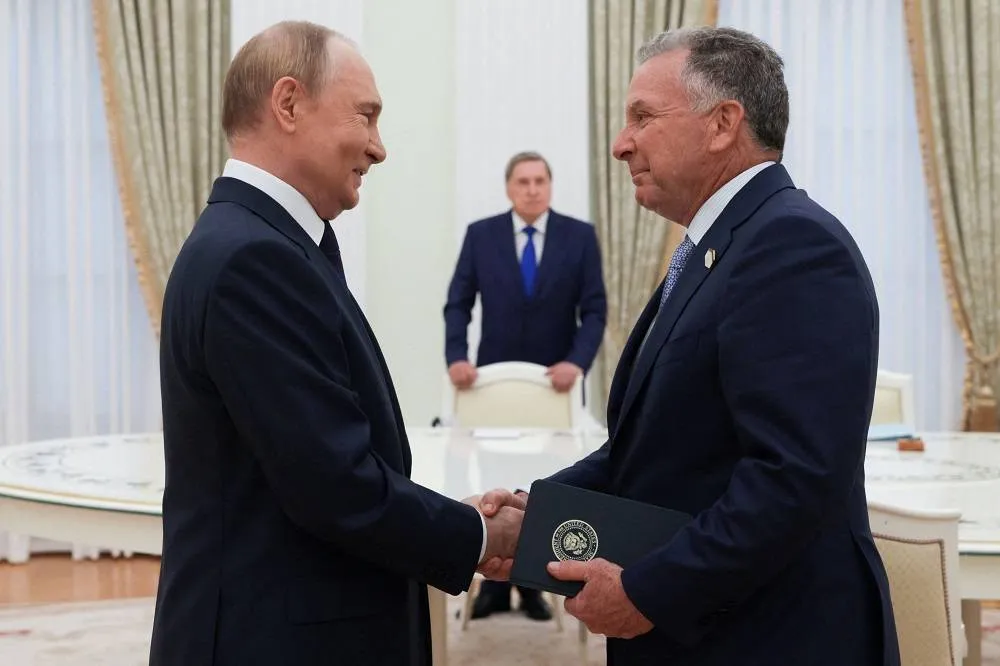
The Lebanese painter Nikola Bakhlini, in his exhibition, “Water Memory”, does not review coastal scenes or familiar feminist portraits. Through it, it dives into the crucifixion of the existential relationship between the object and the water, between memory and extinction, and between the body and the absence. Each of his works can be felt as if it is a salty for the skin, and it is received like a gentle crash of a wave on a rock that does not stop the call of waves.
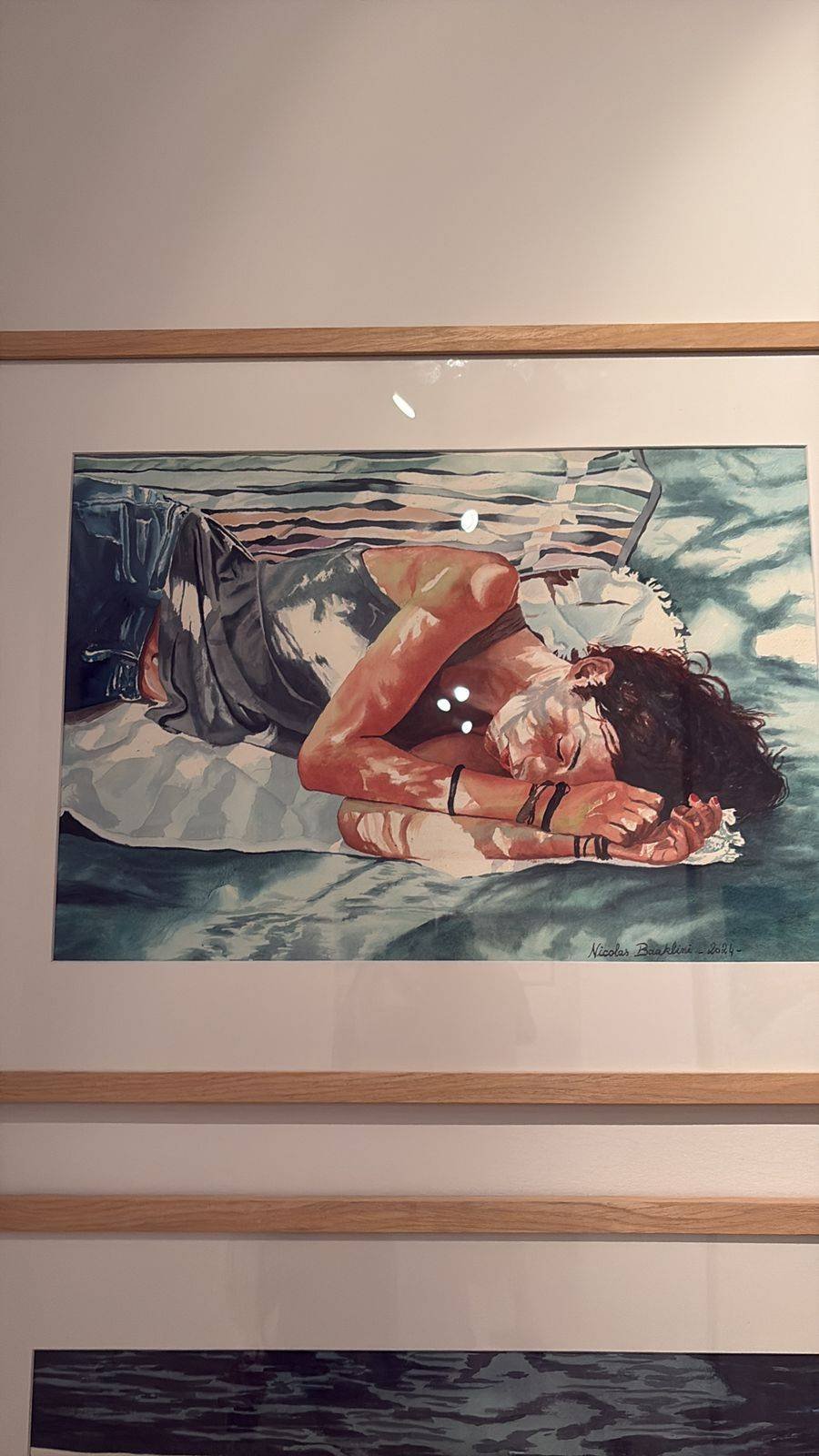
With my mind, returning from a scientific and medical background to the colors of water life, it is drawn to reveal what is melt from reality. It is listened to the shape that escapes from the shape, and it holds it on the ends of the brush: the shadow of the body, the silence that recites crying, nostalgia that is not definitively defined. In “Water Memory”, we see the trace of the scene and not only see it.
His paintings are soft and transparent as if they were about to fade. His women do not walk on the roof; Duffle in the water, compile or separate from it without separating it. Their bodies are tilted, static, radiant, but they are not complete, as if anything of them withdrew to the depth. They are present as absence: thick, fluctuating, cannot be caught. “I draw women as I feel, pending existence and absence, their roots are implanted on the ground, and their bodies slide with the current.” This statement is a key to understanding its entire formative philosophy.
In his paintings, women turn into an intermediate being between two worlds: the world of stability and the world of flow. It is, like the water that overwhelms it, is not a complete mass, but rather a continuous state of formation. Its deep roots on the ground remember its first affiliation, its personal history, and the weight of experiences and memory. But, at the same moment, a body that tends with the current, is a little fragmented, which escapes from the strict border, as if it succumbed to an irreplaceable time.
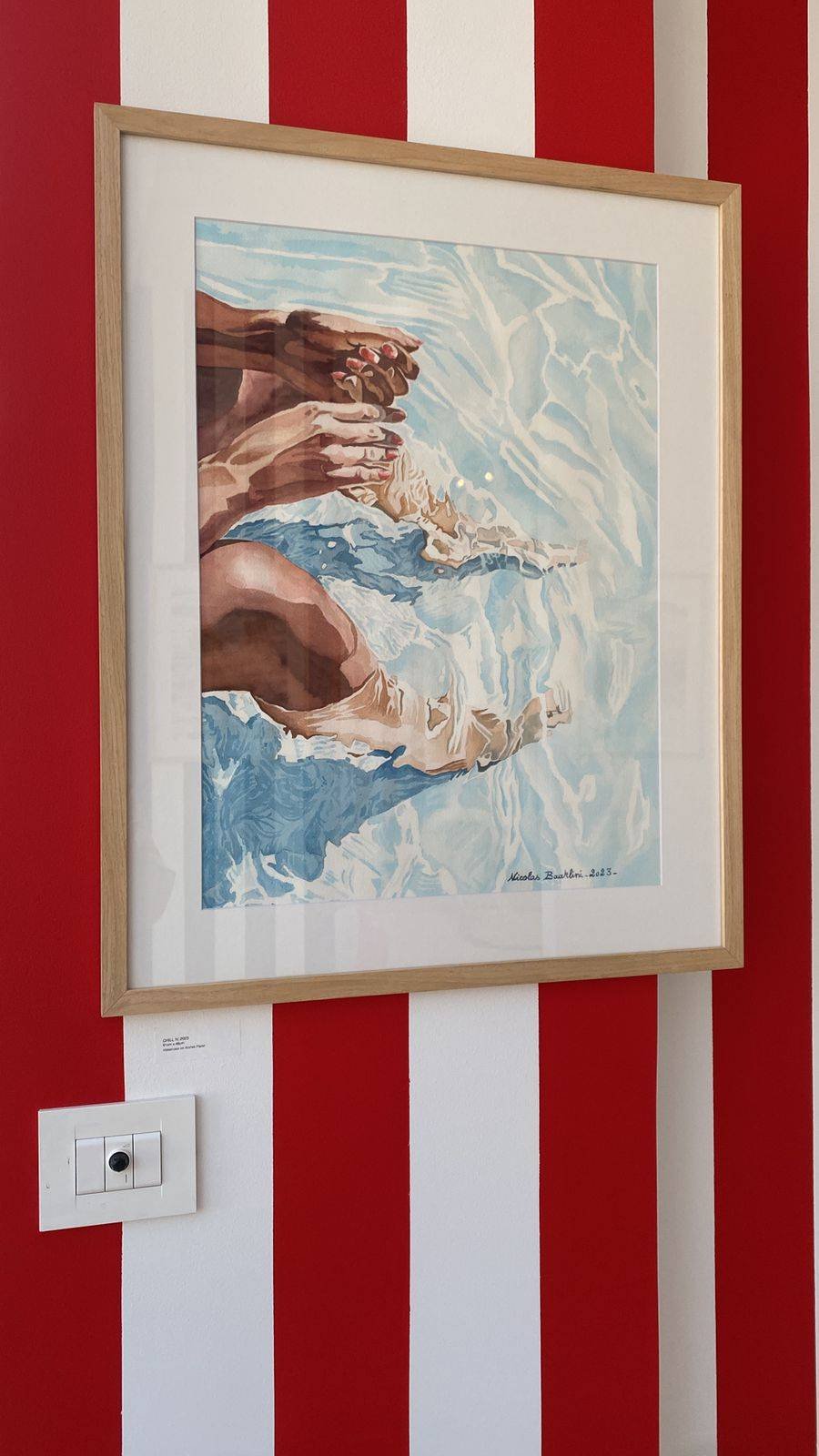
This suspended condition is not expressed. Its strength of another kind: the force that accepts change! Women when Iqqini are not an ideal image fortified against changes. It is an object that is able to adapt and steadfastly in the face of the atmosphere. Its presence in the painting is an effect that similar to what the wave leaves on the sand before the next tide wiped out.
In this sense, every woman in his works becomes a mirror of greater questions about the meaning of existence itself. How do we live rooted in the world, and at the same time we are vulnerable to its harsh currents? How do we keep our features in a permanent erasure? Women in his paintings carry the possibility of answering, by their ability to keep their essence even when part of them fades in depth.
And a woman, like water, reduces the two contradictions together: is saved and destroyed, embraces and abandoned, melt and remains. With my mind, they do not draw their features as much as it draws this accurate balance between adherence and escape, and what is seen and what is evaporated.
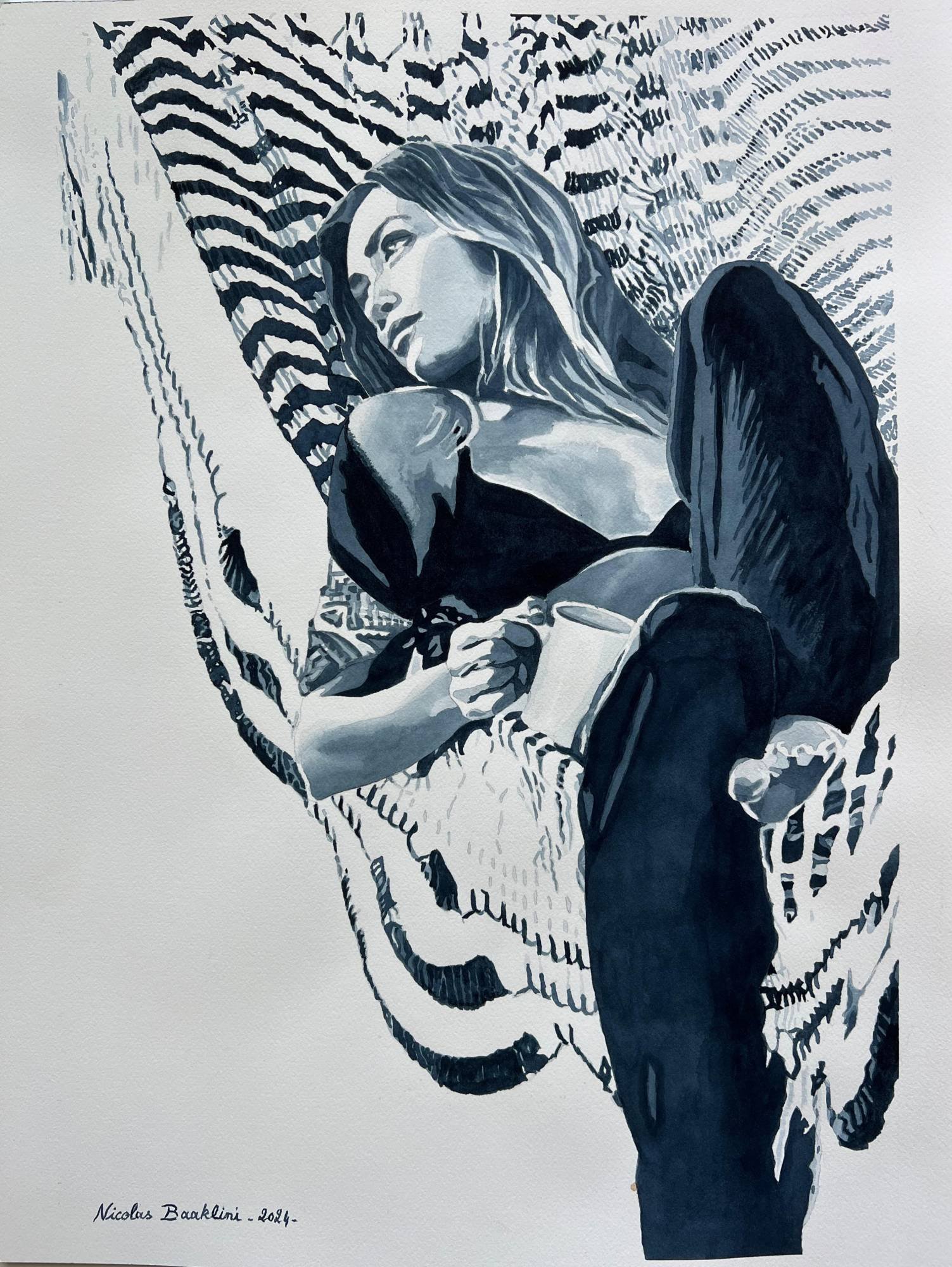
And water, in the eyes of the artist, is beyond the background: it is a soul. Simulate it before drawing it. It deals with watercolors as it deals with memory: patience and caution. It is, like his memory; The installation is resistant, flowing, spoiled, surprised, and leaving its impact even after it dries. He says, “I chose watercolors because it is not subject. In every stroke an echo and disturbing brush and searching for something that may not be no longer here, but it still feels. (Water memory) is an exhibition that expresses from nostalgia to soft power for what remains in us, even when it goes.
He continues: “Water for me is not only an element. I see it as a witness. It carries stories, keeps time in a different way, dissolves the edges, softens the memory, and reflects the truth and illusion together. It is a mirror of the soul: beautiful, volatile, wounded, and neighborhood. From here, the drawing is tasked with a task that goes beyond the visual documentation towards trying to formulate what is not seen. The sea, as he says, is assigned things that words are unable to express. This is life.
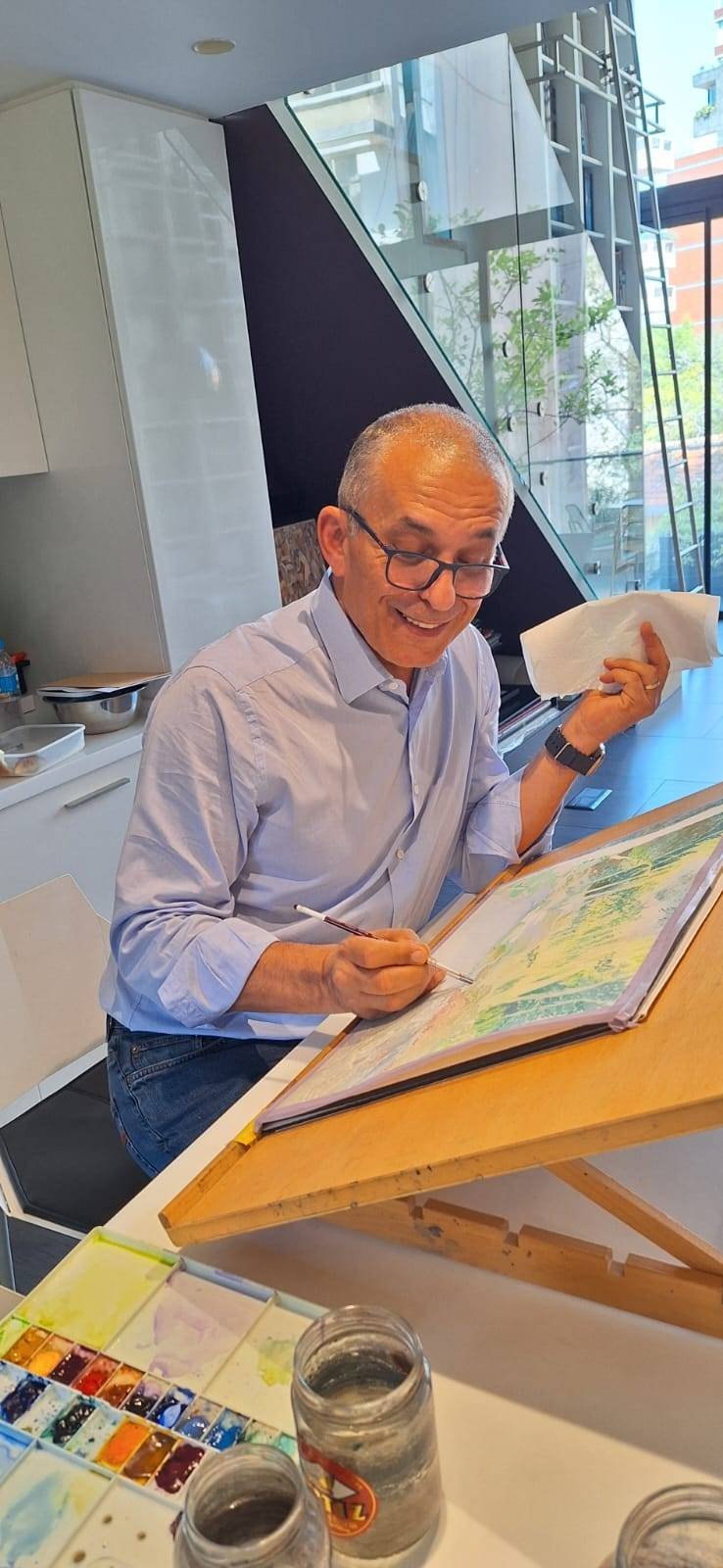
And do not paint the minds of women as they are, but rather as they happen in the water from Sakina. It is searched for the balanced balance between hardness and stroke, and between stillness and depth. The wave is a rhythm of his feathers: He returns to the same feeling repeatedly, as the wave returns to the beach, to restore the same thing without repeating it.
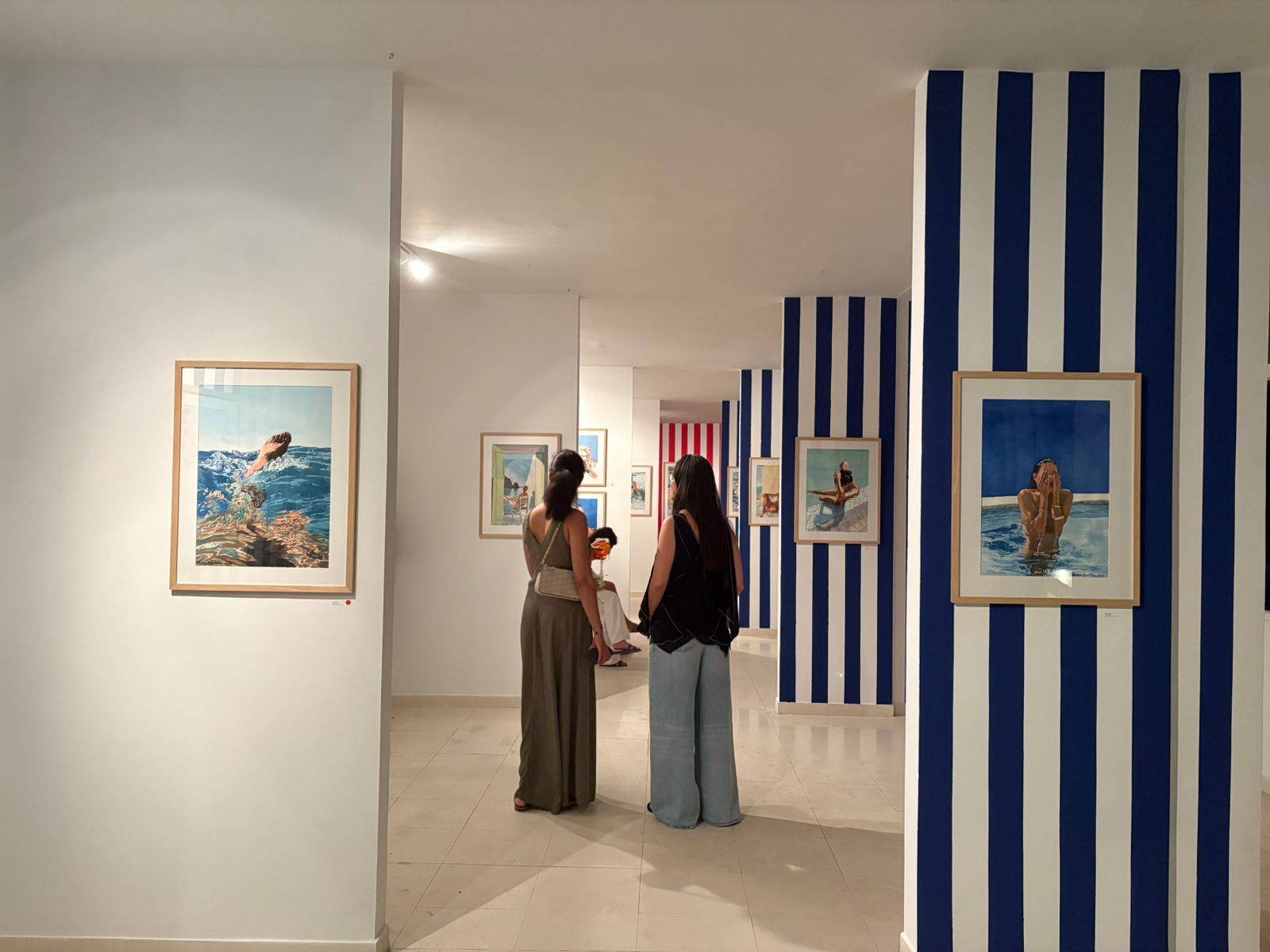
In “Water Memory” (hosted by (No Chef in the Kitchen) in the Beiruti summer area), Nikola Bakhlini offered me a world of removal, yet it was possible to celebrate dignity instead of sorrow. A world that lies in the shadows, in salt, in the face, and in the wet hand.
The exhibition does not call for decisiveness, preferring permanent residence in the gray area between attendance and absence, between the sea and women, and the glow of memories.