The European Union faces sharp reactions on the trade agreement with the United States
The European Union faced violent reactions due to the trade agreement it reached with the United States, which stipulates a 15 percent increase in customs duties on many exports of the Union – including cars, medicines, semi -conductors – and 50 percent on steel and aluminum.
“It is a black day when an alliance of free peoples decides, a society to confirm its values, defend its interests, submission,” wrote French Prime Minister Francois Bayro on social media.
Accord Van Der Leyen-TROMP: c’est un jour sombre que Celui ONELLIANCE De Peuples Libres, Rassemblés Pour Affiramer Leurs Valeers Et Défundre Leurs InséRêts, SE Résout à la Soumiste.
– François bayrou (@Bayrou) July 28, 2025
Bayro’s criticism came after months of French calls to European Union negotiations to take a strict position against President Donald Trump by threatening mutual measures -a position that contradicts the most reconciliation approach that Germany and Italy followed.
Under the agreement concluded on Sunday, customs duties will be imposed by 15 percent on most European Union exports to the United States, including cars and medicines. The European Union also agreed to spend hundreds of billions of dollars on US energy and weapons products. Although the agreement raises the customs definitions, investors said it also helped reduce the uncertainty about the trade that chased the markets since US President Donald Trump announced the “liberation day” in early April.
The French Minister Delegated for European Affairs, Benjaman Haddad, said on Monday that the agreement between the European Union and the United States on customs duties on European products provides “temporary stability”, but it is “unbalanced”.
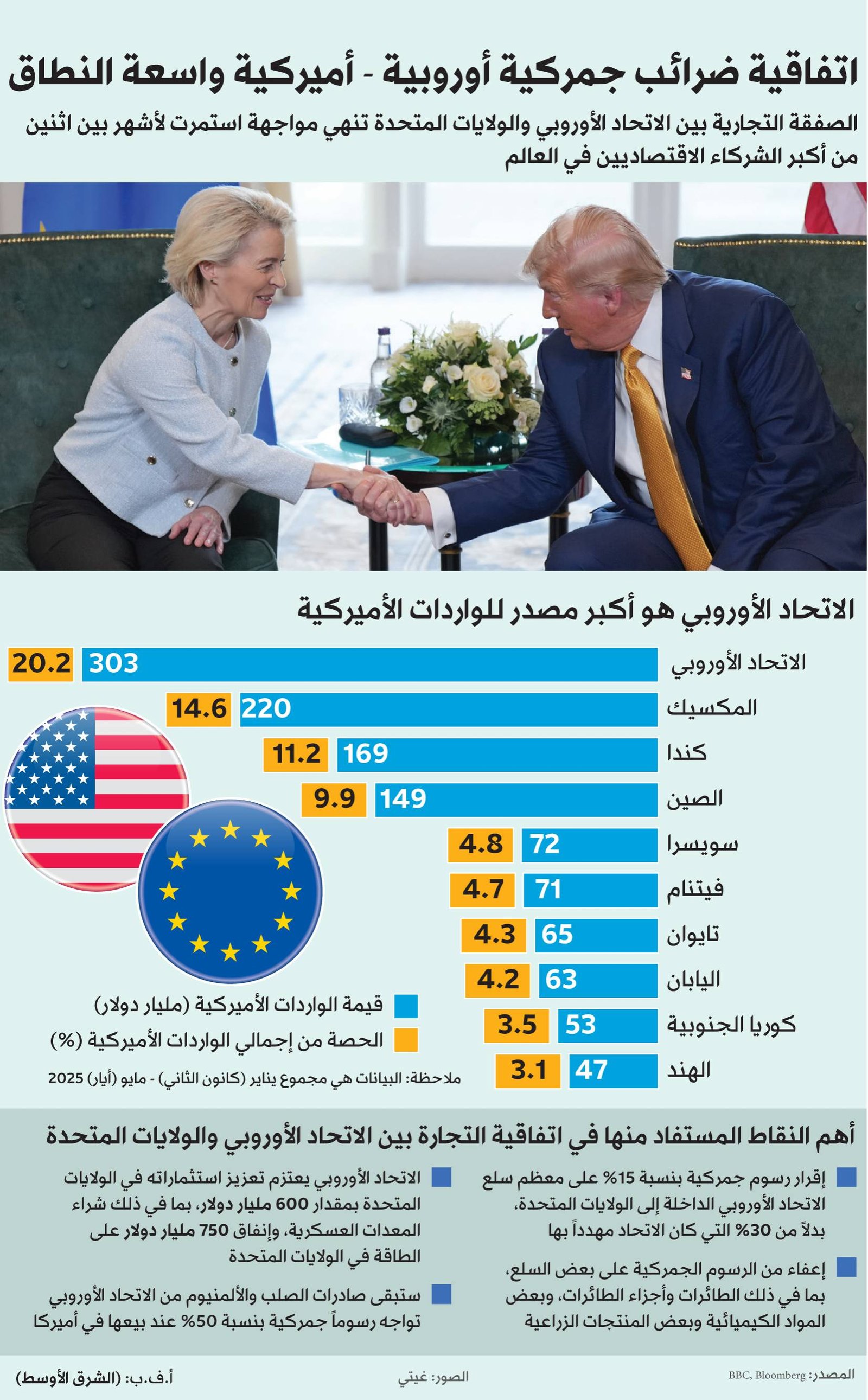
The high -level French criticism has contradicted, and President Emmanuel Macron silenced since the signing of the agreement between Trump and the President of the European Commission, Ursula von der Line, with the most moderate reaction than Berlin and Rome. The French government ministers acknowledged that the agreement carries some advantages – including exemptions for sectors such as spiritual drinks and space – but they said that they are still not essentially unbalanced.
“This situation is not satisfactory and cannot continue,” said French European Minister of European Affairs, Benjamin Haddad, on the platform X.
Trade Minister Laurent Saint Martin criticized the European Union dealing with negotiations, saying that the Union should not have to refrain from responding, as he described it as a power to power that Trump began. “Donald Trump only understands power,” he said to Radio. He added, “It was better to respond by showing our ability to respond early. The deal could likely look different. ”
Macron has stated that the European Union should respond similarly if the United States imposed customs duties on the European Union commodities, and applied similar measures to the United States’ imports to the Union, especially on services, in which the United States has a surplus with the European Union.
German – Italian position
But the most soft position called by German Chancellor Friedrich Mertz and Italian Prime Minister Georgia Meloni, whose states are more dependent on France on exports to the United States, prevailed. The German counselor considered the agreement that he “avoids an unnecessary escalation in commercial relations.” He said in a statement: «We were able to maintain our basic interests, although I was hoping to see more facilities in the Atlantic trade. The United States is the largest commercial partner for Germany. ”
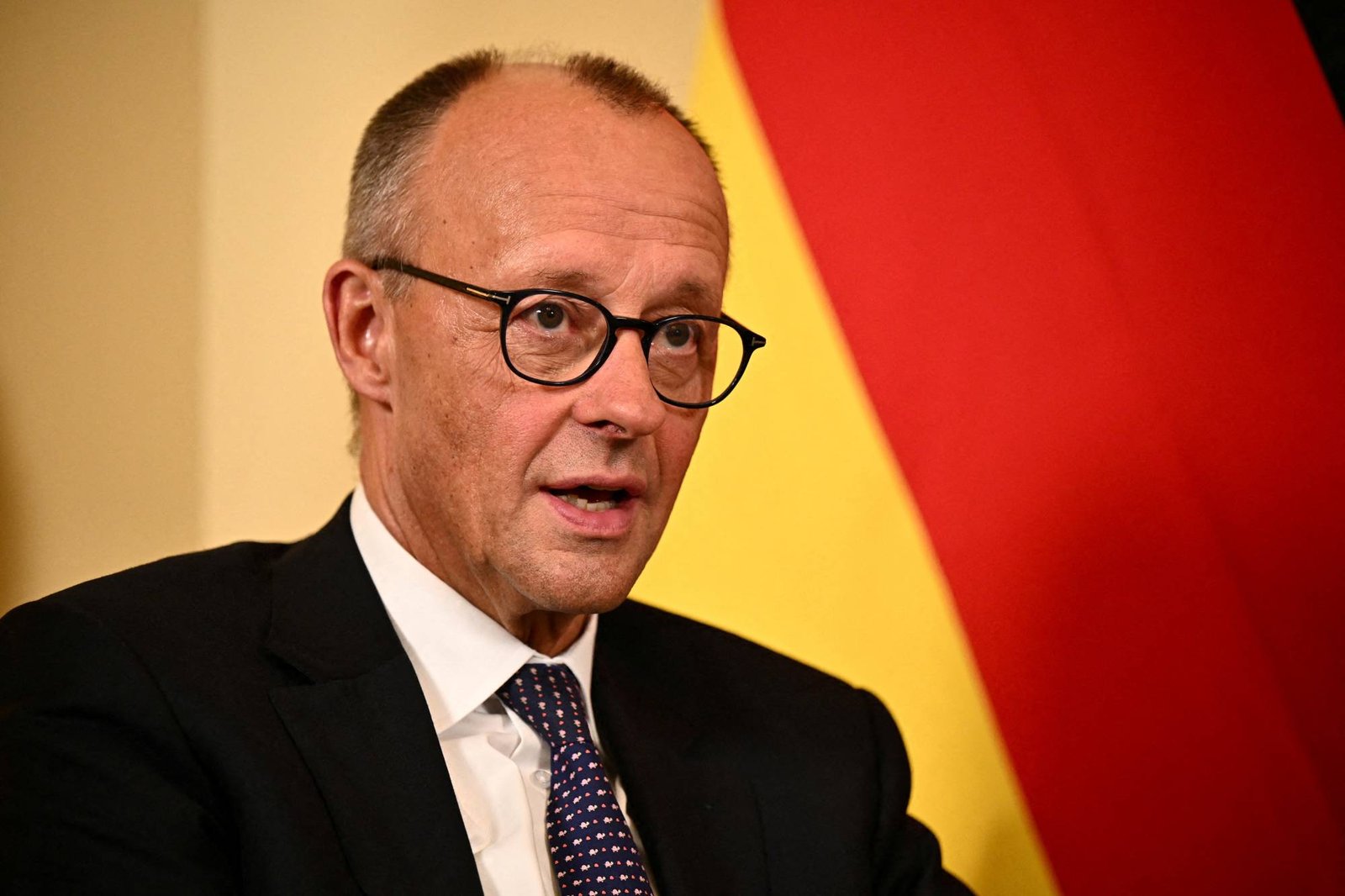
“This agreement helps to avoid a commercial dispute that would have strongly affecting the German economy,” Mertz added, expressing its satisfaction, especially regarding the auto industry, “where the current customs duties of 27.5 percent will be reduced to almost half, to become 15 percent.”
“In this field specifically, the rapid reduction of customs duties is acquired.”
As for the German Finance Minister Lars Clingel, he saw that a negotiating solution with Washington was “good as a first step.” He added, “We will now evaluate the results of the negotiations and their impact on the economy and employment in Germany.”
On the other hand, the German Industries Union, the largest industrial body in Germany, warned that the agreement is a “insufficient settlement” that sends a “fatal signal” to the European Union’s economy and the United States.
For her part, Italian Prime Minister, Georgia Meloni, welcomed a trade agreement between the European Union and the United States, but she said that she would seek more details.

Italy is one of the major European countries exporting to the United States, with a trade surplus of more than 40 billion euros (46.70 billion dollars).
The Italian government, under the leadership of a national coalition, urged its European partners to avoid any direct clash between the Atlantic banks.
In a statement, Meloni said that the agreement “guarantees stability”, adding that the 15 % is “sustainable, especially if this percentage does not add to the previous customs duties, as it was originally planned.” She added that “a number of elements are missing,” referring to major details about “specially sensitive sectors”, such as the pharmaceutical and auto industry.
As for Spanish Prime Minister Pedro Sanchez, he said: “The efforts made by the European Commission were appreciated, and the constructive and negotiating position of the President of the European Commission was appreciated. However, I support this commercial agreement, but I do so without enthusiasm. ”
Hungarian Prime Minister Victor Urban said, for his part: “This is not an agreement … Donald Trump had breakfast with von der Line, and this is what happened, and we expected this to happen.
The press office of Romanian Prime Minister Elie Bigran issued a statement saying: “Prime Minister Elie Bigran praises a trade agreement, and believes that it is a good qa … it removes the current state of lack of clarity that caused unrest and lack of certainty in commercial relations.”
“The agreement provides the ability to predict, and it is desperate, in need of the global economy and Finnish companies. You should continue to remove commercial barriers. It is the free trade through the Atlantic alone that is the greatest benefit on both sides. ”
While the Danish Foreign Minister Lars Loki Rasmussen said: “The conditions of trade will not be good as they were before, and this is not our choice, but a balance that contributes to stabilizing the situation and satisfies the two parties must be found.”
The Swedish Minister of Trade, Benjamin Dosa, said that “this agreement does not sing anyone, but it may be the least worse. What seems positive for Sweden, based on an initial evaluation, is that the agreement provides a degree of ability to predict. ” Meanwhile, Irish Minister of Trade, Simon Harris, indicated that the agreement “provides a degree of certainty that is intensified by Irish, European and American companies, which together represents the most integrated trade relations in the world. While Ireland regrets the inclusion of the 15 % basic customs tariffs, it is important that we now have more certainty about the foundations of the commercial relationship between the European Union and the United States, which is essential for jobs, growth and investment.
On the other hand, the European Commercial Commissioner said that the agreement between the European Union and the United States restores stability and opens the door to cooperation.

Markets
After the agreement, European stocks rose on Monday, to their highest level in four months. The “Stoxus Europe 600” index increased by 1 percent in early trading, while the German “DAX” index increased by 0.9 percent, and the French “CAC 40” index by 1.2 percent.
However, the euro declined with investors absorbing the early details of a commercial agreement that maintains high customs duties on most of the European Union commodities.